







How an Additional Walmart Account Can Provide Value Without Breaking the Rules
An additional Walmart account can be useful not only for organization, but also for making better use of promotions, rewards, and different shopping scenarios. The key condition is that the account should have a clear and legitimate purpose: for example, separating personal and business purchases, different family members, separate expense tracking, or small-business purchasing.
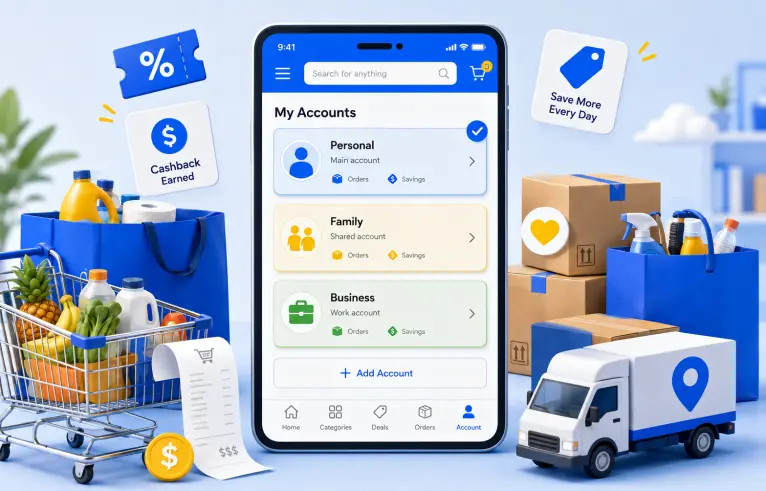
One practical example is separating personal and family purchases. If several adult family members place orders independently, each person may find it more convenient to have their own account with a separate purchase history, addresses, payment methods, and personalized offers. This helps keep orders, returns, and recommendations from getting mixed together. At the same time, it is important not to use multiple accounts to repeatedly claim the same promotion if the offer terms limit it to one user, one account, or one purchase.
Another example is using Walmart Cash and manufacturer offers. Walmart Cash is a promotional mechanism available to users with a Walmart account through specific programs and offers. Usually, the user selects an eligible offer, buys the product, and after delivery or pickup, Walmart Cash may be added to the account. If several people in a family or team make purchases independently, each person can track relevant offers in their own account. However, additional accounts should not be used to duplicate the same offer, repeatedly apply coupons, or artificially increase rewards: Walmart Cash terms require an account to be in good standing, and violations or prohibited conduct may lead to loss of eligibility to participate in the program or use the balance.
For regular shoppers, it can be useful to separate accounts by purpose. For example, one account can be used for everyday purchases, groceries, and household items, while another can be used for work-related purchases, office supplies, or a small team. This makes it easier to track expenses, repeat regular orders, store the right delivery addresses, and avoid mixing personal purchase history with business purchases. For companies, Walmart also offers Walmart Business, where purchasing, tax-exempt settings, and account management can be centralized.
Additional value may also come from membership programs. For example, Walmart+ includes benefits such as delivery, pharmacy delivery, fuel savings, and other features available through a Walmart account. If a user shops rarely, a separate membership may not be worth it. But if there is a separate family or business scenario with frequent orders, it may be useful to evaluate where the membership actually pays off. It is important not to create additional accounts only to repeatedly use free trials or temporary offers if that contradicts the promotion terms.
A useful scenario is having a separate account for seasonal purchases and sales. For example, a family may use one account for regular items and another for large purchases, gifts, back-to-school shopping, or holiday orders. This helps control the budget, track deliveries and returns, and preserve the purchase history for a specific category. But if a promotion limits product quantity, promo-code use, or participation to one account, those limits should be respected.
In this way, an additional Walmart account can provide value through better purchase management, personalized offers, Walmart Cash, membership benefits, and separate expense tracking. But a safe strategy is not based on bypassing rules. It is based on transparent separation of real use cases: personal purchases, family orders, business purchasing, or separate spending categories.